Amicapsil’s effect on pressure injuries in SCI
Read more
Read more
Both studies find 100% closure rates
for acute and chronic pressure injuries
are on NHS Supply Chain
quicker than antibiotics and antiseptics.
Effective on resistant infections and does not contribute to AMR.
Review article discussing
the wound microbiome and Amicapsil
Review article discussing
the wound microbiome and Amicapsil
Review article discussing
the wound microbiome and Amicapsil
acting via the skin and wound microbiome without the use of antimicrobials.
Effective wound treatment in immunocompetent and immunocompromised persons.
Effective on antibiotic and antiseptic resistant wound infections.
Effective in immunocompetent and immunocompromised persons.
The Microbiome Supporting Soap is ideal for sensitive skin, including the skin of babies and toddlers.
“From 4 weeks of absolute hell – to being pain-free, getting a full night’s sleep and back to normal at work.”
“From 4 weeks of absolute hell, in pain 24 hours a day, struggling at work – to being pain-free, getting a full night’s sleep and back to normal at work.”

NH ( patient)
NH ( patient)
NH ( patient)
Effective in treating severe infections, including infections not responding to antibiotics and antiseptics.
60% quicker removal of infection than antibiotics and antisepics.
No additives or chemicals
Infection causes pain and by removing the infection, Amicapsil and SertaSil reduce the pain.
Effective treatment of wounds and pressure ulcers in SCI-persons and in controlling soft tissue infection caused by osteomyelitis.
climate change
VH (patient)
VH (patient)
VH (patient)
it is biologically recyclable and does not require the use of chemicals, plastics or antimicrobials.
How to Use SertaSil in wound treatment
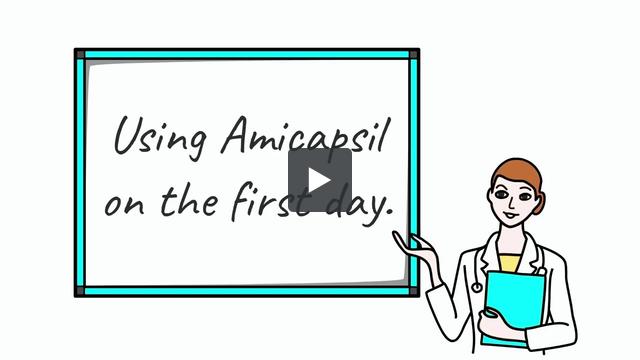
Watch our three videos, which describe in detail how to use Amicapsil and SertaSil for the treatment of wounds. The principles are identical as they are both based on MPPT. The first video covers the first day of use and the subsequent two, how to continue the use of until wound closure. Activate subtitles by pressing on CC.
Most common error:
The wound is not washed thoroughly. It needs to be rinsed for several minutes with tap-water at a good pressure.
Most common error:
The wound should not be completely dry. Apply SertaSil while the wound surface and the surrounding skin are still moist.
Most common error:
The layer of SertaSil should be unbroken and must cover the wound edges. Use a finger to rub a thin layer into any affected skin around the wound.
Most common error:
Air must be able to circulate across the wound surface. SertaSil uses the force of evaporation to function and, without this, it will not work. Do not use synthetic dressings – only woven 100% cotton gauze swabs.
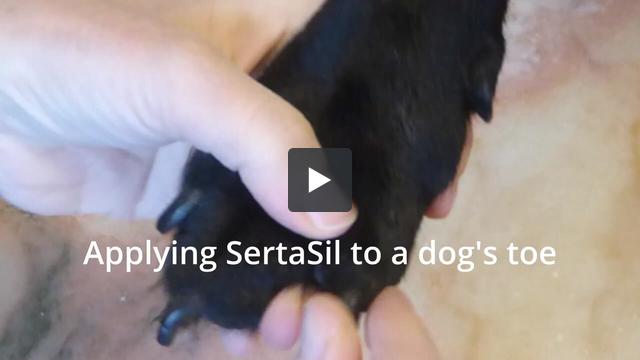
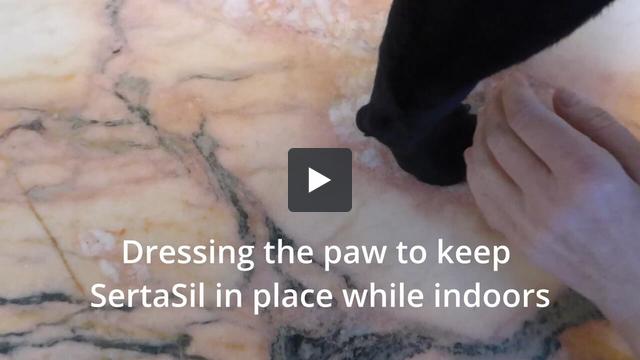
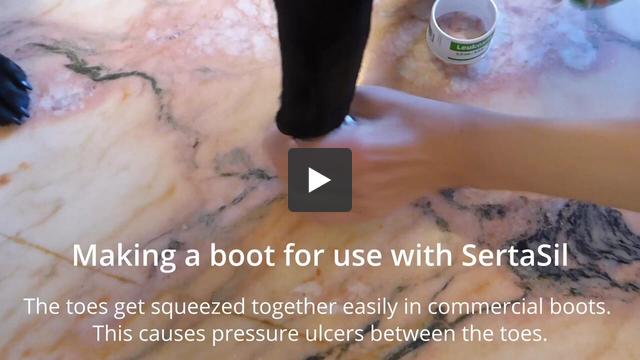
Three videos showing how SertaSil can be applied to a dog paw and how the paw can be dressed when inside and outdoors.
Frequency
Repeat this procedure daily until the wound shows no signs of infection or necrosis.
In non-chronic wounds this will on average will be 3 days.
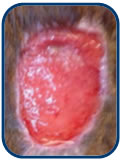
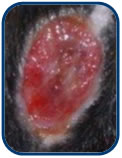
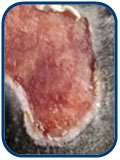
Examples of the surface of a wound on which the use of SertaSil can be ceased:
After SertaSil
After ceasing the use of SertaSil the wound should be dressed as above and left completely undisturbed to heal.
The dressing can be changed weekly or biweekly – unless the wound gets wet as that would prompt a wash and dressing change.
- SertaSil has not been associated with wound irritation or contact sensitisation (allergy).
- The components of SertaSil have not been found to cause toxicity.
- SertaSil is not absorbed by the body.
- SertaSil can be removed by simple irrigation with water.
The longer version
1 Remove dirt, pus, dead tissue, slough, and very old scabs or other evidently inappropriate material from the wound.
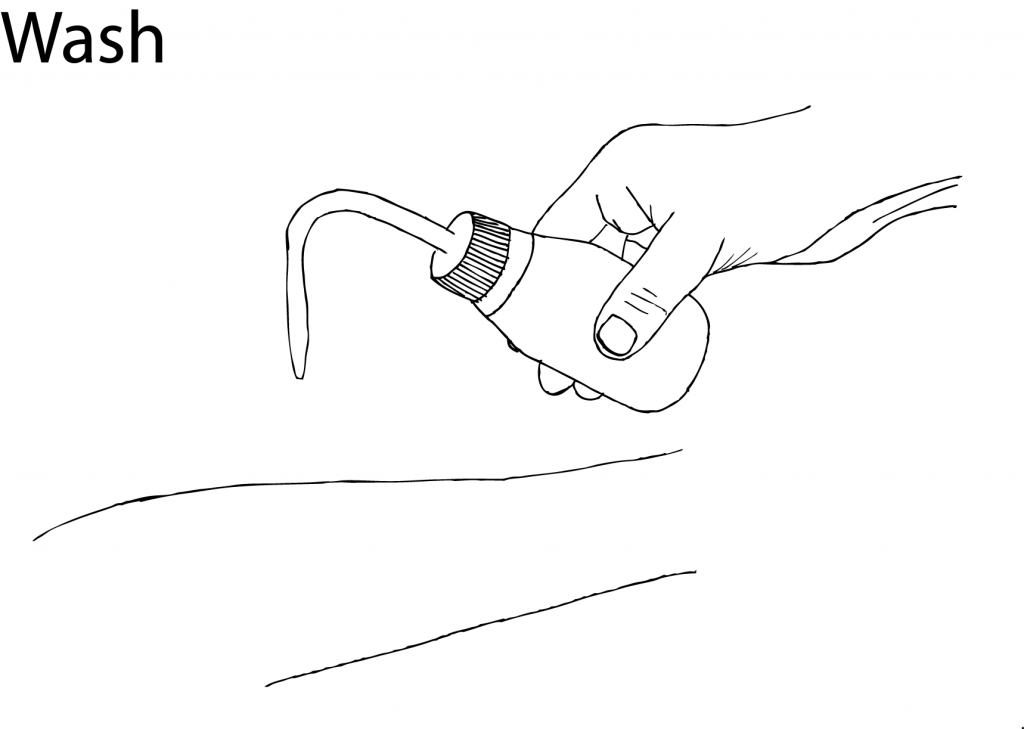
2 Wash the wound with plenty of clean tap water. A wash-bottle, or alternatively a large syringe, will allow a good cleaning pressure. If you prefer, you can use saline. Do not use antimicrobials such as antiseptics or antibacterial rinsing solutions or soaps for rinsing.
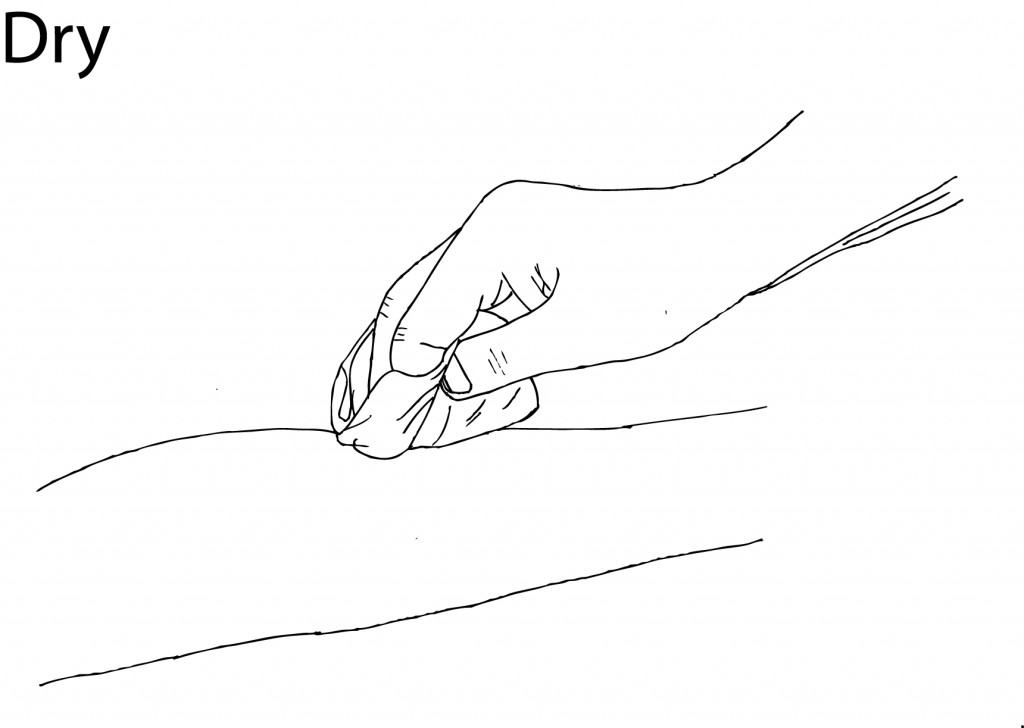
3 Gently dab the wound dry with a gauze swab.
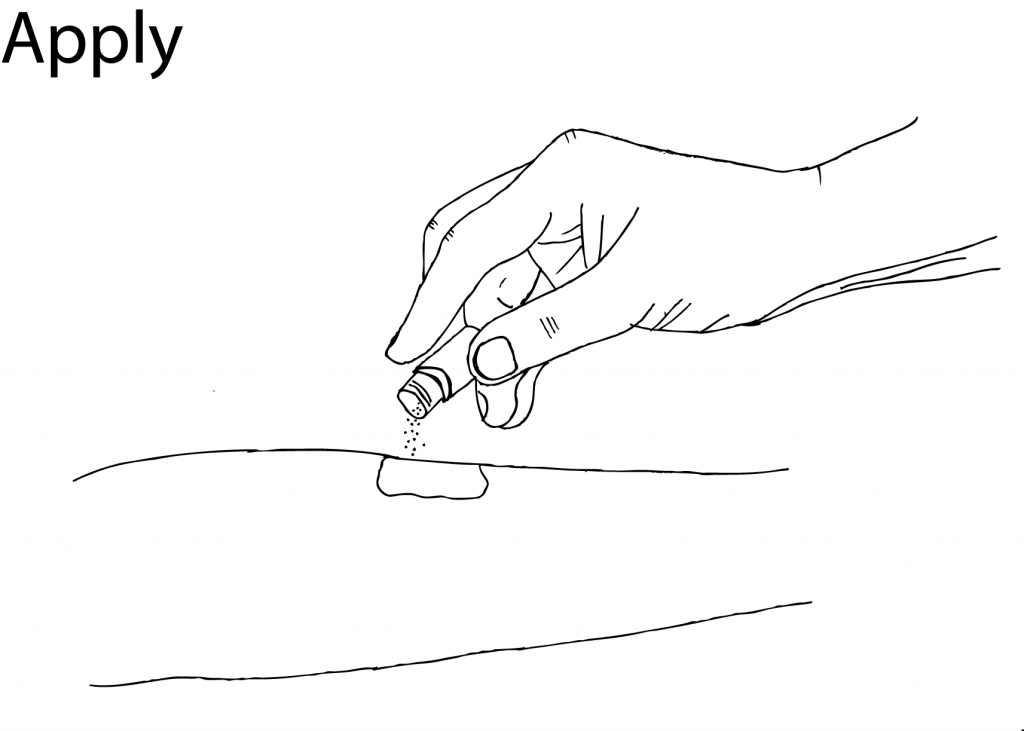
4 Sprinkle SertaSil in an even layer 1-2 mm thick, directly onto the entire wound surface. This includes the visible area, all crevices, beneath loose flaps of skin and any undermined areas, all sides of the wound and all surfaces lining any tunneling. Cover the wound edges well, extending to an area 5 mm from the wound edge, onto the unbroken skin surrounding the wound opening. If the area surrounding the wound area is red and inflamed, very gently rub SertaSil into the red area.
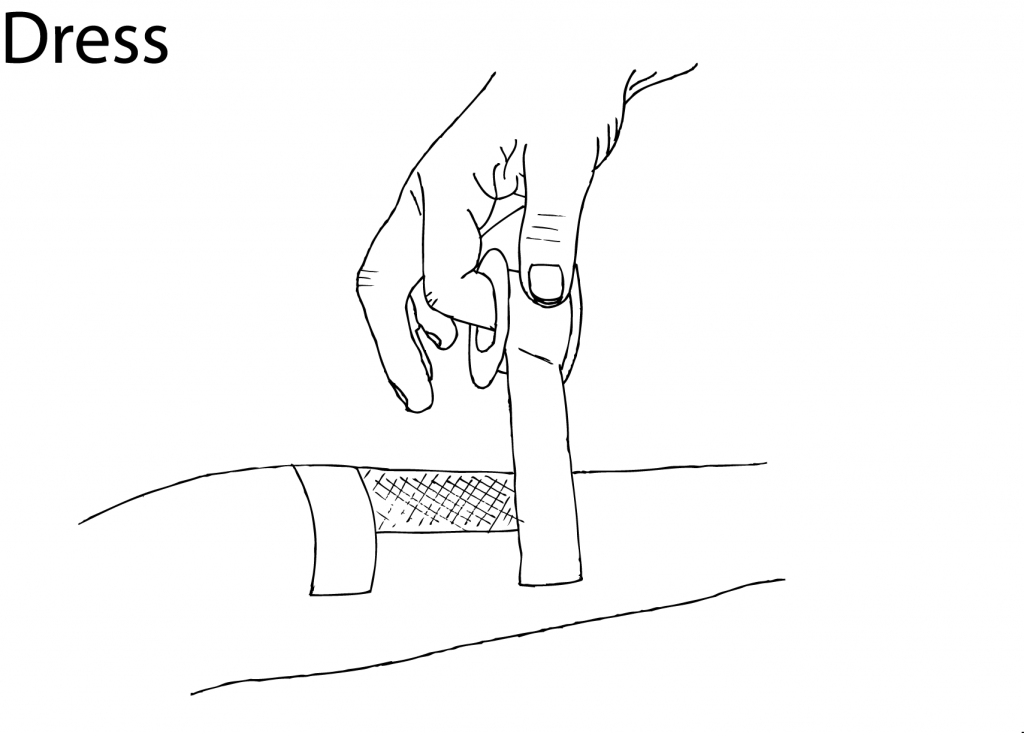
5 To keep the SertaSil in place on the wound, cover it with a lint-free woven 100% gauze swab and fasten it along the edges using sticking plaster tape. If the wound is covered with SertaSil all over the surface, the gauze will not stick to the surface.
6 Daily, remove any pus and dead tissue (yellow slough) with a moist gauze. Then wash with plenty of tap-water, preferably using water from the shower head to clean out all corners and crevices. Then apply SertaSil and a covering dressing as described above.
7 The day there is no more yellow slough on the wound surface and there is no exudate on the secondary dressing upon removal, discontinue the use of SertaSil. Just wash the wound in the shower without touching the wound surface. Dab it dry very gently. Apply a N-A dressing from Systagenix, not the N-A Ultra and not a different dressing with NA in its name. Repeat this daily until full closure.
8 As healing progresses, flakes or scales or wafer-thin crusts are likely to appear on top of the wound and in the area of unbroken skin surrounding the wound. This is a sign of healing and regeneration of tissue taking place in the skin as well as the layers underneath the skin. Don’t remove these. They will fall off in their own time. The area might appear dry, it may even seem too dry, but it isn’t. Don’t touch the flakes. They will fall off by themselves when the skin underneath is ready. Don’t apply and creams or ointments.
9 If you for some reason inhibit the access of air to the wound, for example by applying a different dressing on top of the healing wound after no longer needing the SertaSil every day, you may one day experience that there is a bit of exudate stuck to the dressing when you remove it – similar to what you experienced while first applying SertaSil. This is an indicator that the healing process, that had been initiated by SertaSil , has been impeded. Apply SertaSil as before, usually for 1 day, and continue as before. If your wound is very old, it is advised to avoid this situation and keep the healing process going without any interference until full closure, e.g. by providing the optimal healing conditions.
For clarification and details on particular wound conditions, please read the official Instructions for Use. If you have any questions, please write them to contact @ willingsford.com.